
11 hr
Big Island Volcanoes, Waterfalls & Coffee Adventure
Full-day exploration of Hawaii's volcanic landscapes, cascading falls, and Kona's famous coffee country
Reserve
Hand-picked by our editors — only the best 5 experiences from 140 reviewed.
Verified partners for every tour, free cancellation where available, and instant confirmation on every booking.
11 hr
Full-day exploration of Hawaii's volcanic landscapes, cascading falls, and Kona's famous coffee country
Reserve
7 hr
Seven-hour expedition from Kilauea's smoking crater to black sand shores and Hilo's waterfalls
Reserve
12 hr
Journey through volcanic landscapes at dusk, then watch the night sky come alive above Hawaii's craters
ReservePrices from verified partners. Availability updates in real time at checkout. Free cancellation policies apply where shown.
The landmarks, rooms, and views travelers on this tour remember — all visible on a single visit.
This summit crater is central to Hawaiian tradition and home to the deity Pele, featuring dramatic glow during active episodes.
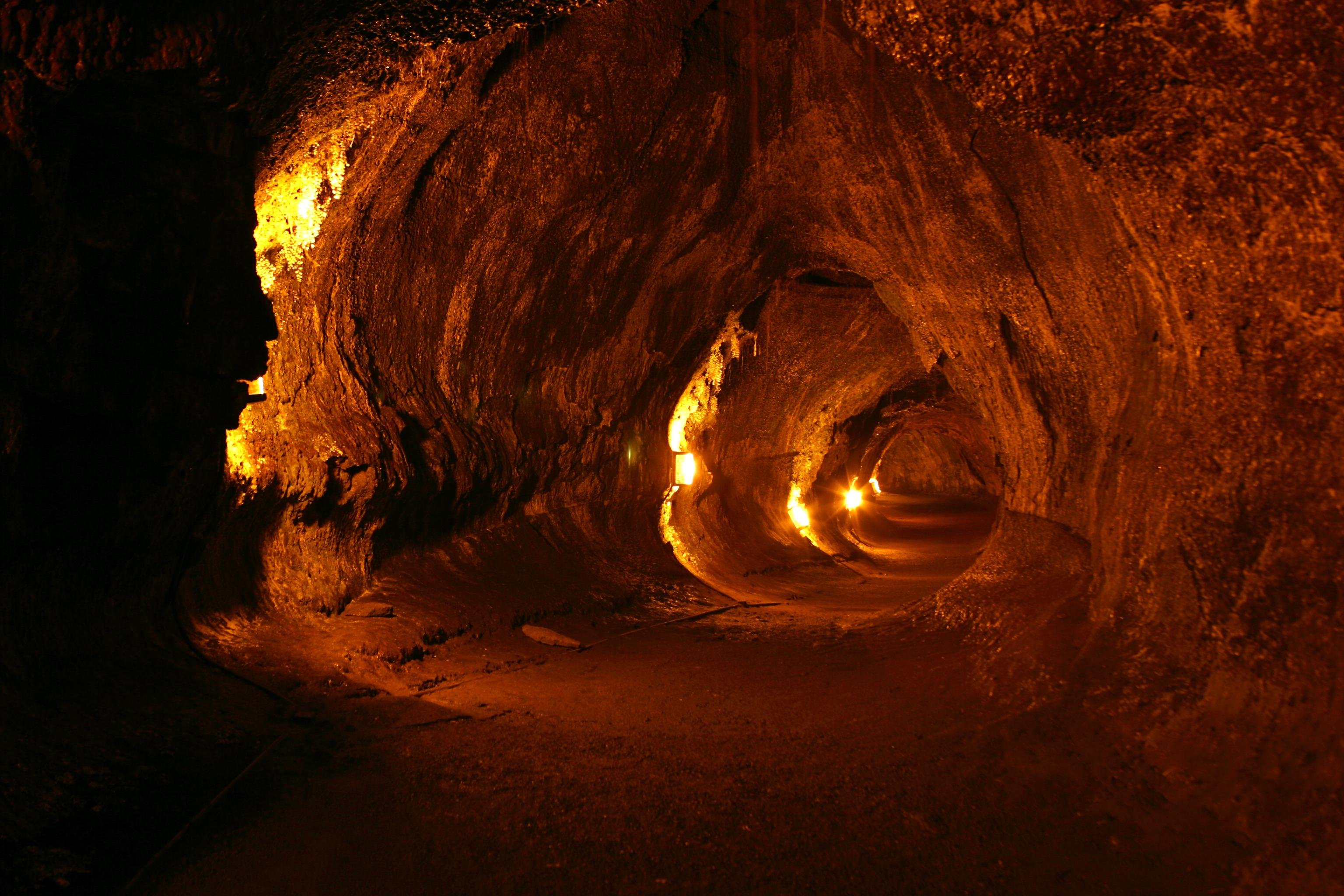
Known as Nāhuku, this 500-year-old lava cave offers a walk through an ancient subterranean river of molten rock.
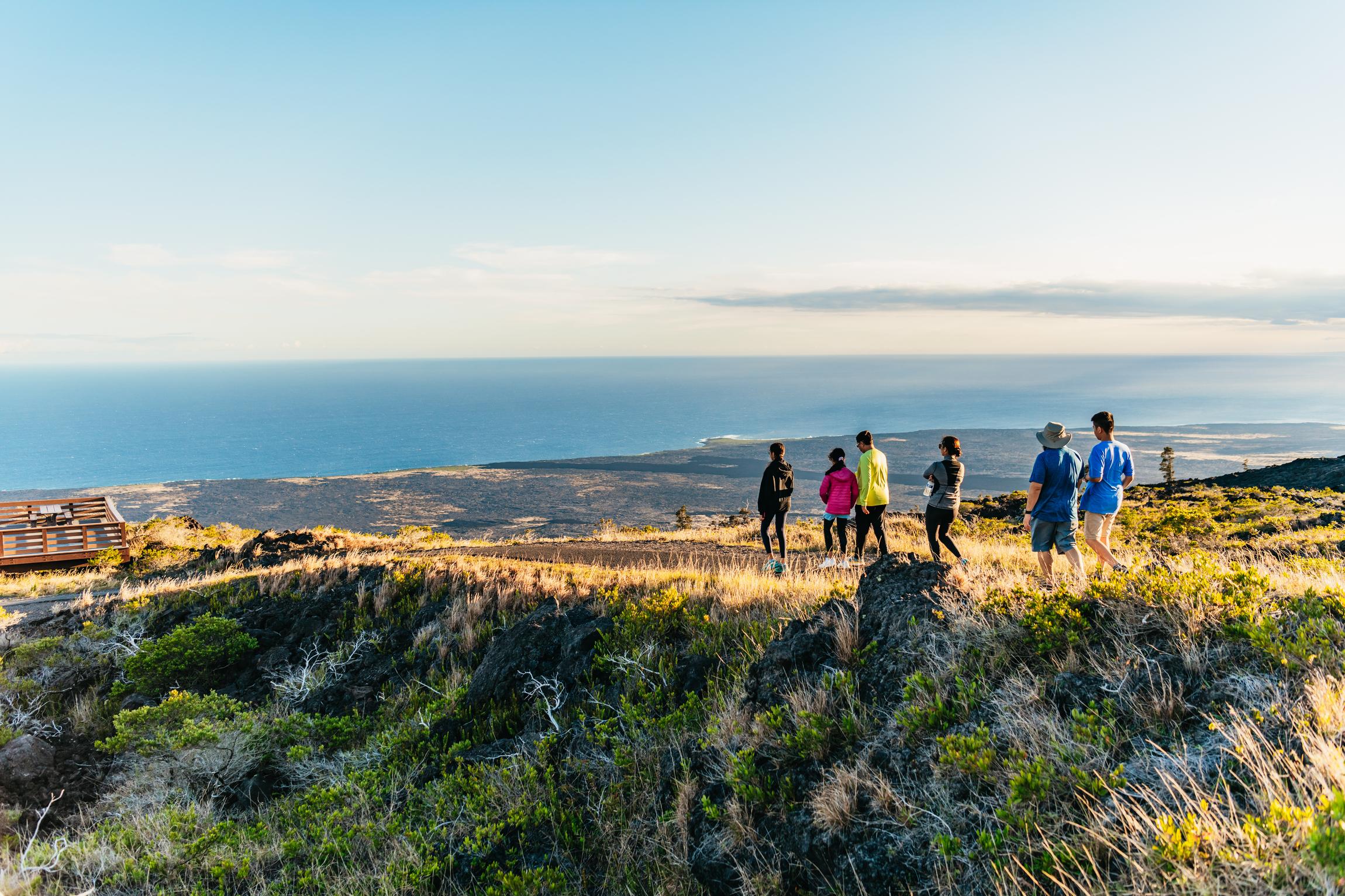
A 18.8-mile scenic drive descending from the summit to the rugged coastline through diverse volcanic landscapes.
This trail crosses a solidifying lava lake floor, allowing visitors to walk across a site of past volcanic fire.
Known as Haʻakulamanu, this area features steaming vents releasing volcanic gases and vibrant mineral deposits.
They complement each other; most visitors who do both call the aerial view the more thrilling, while ground tours offer a deeper connection to the caldera floor.
| Feature | Top pick Helicopter Tour | Ground Tour |
|---|---|---|
Vantage Point |
Aerial panoramic views | |
Level of Physical Activity |
Minimal seating | |
Access to Park Features |
Remote restricted areas | |
Geological Perspective |
Large scale landscape formation | |
Cost Considerations |
300–600 USD (summer) | |
Weather Sensitivity |
High — flight dependent | |
| See tickets → |
Verdict: Securing big island volcano tour helicopter tickets allows you to witness the massive scale of the lava fields, while ground exploration provides an intimate look at the crater rim drive features and geological formations.
Choose your ticket, select your date, and reserve in under two minutes. Secure checkout handled by our verified partner.
Instant confirmation by email, with a mobile voucher you can save offline. No printing, no queuing at a collection desk.
Arrive at the entrance, show your voucher on your phone, and walk in. Most tickets include priority or skip-the-line access.
Practical details for your visit straight from our verified partners — hours, access, rules, and how to get there.
Wear sturdy, closed-toe shoes suitable for uneven lava rock terrain. Pack long sleeves and pants to protect skin from sharp tephra and volcanic particles.
No specific bag restrictions apply, but guests are encouraged to pack lightly. Always keep a safe distance from marked hazard areas and respect all closures.
Photography is permitted, but drones are strictly prohibited within park boundaries. Use caution when taking photos near crater edges or steaming vents.
Many overlooks and paved paths are accessible. Please verify trail conditions with rangers, as volcanic activity frequently alters surface stability.
The park is family-friendly, though volcanic gases and uneven terrain require close supervision of children. Educational exhibits at the temporary Welcome Center are ideal for youth engagement.
Carry at least 2 liters of water per person as there are limited facilities on remote trails. Pack a picnic to enjoy at designated viewpoints like Kealakomo.
Best time to go, insider tips, nearby landmarks, and the cancellation fine print — flip through to skim what matters to you.
Flexible, no hidden fees.
Entry fees are non-refundable and valid for 7 consecutive days. Passes are not replaceable if lost or stolen.
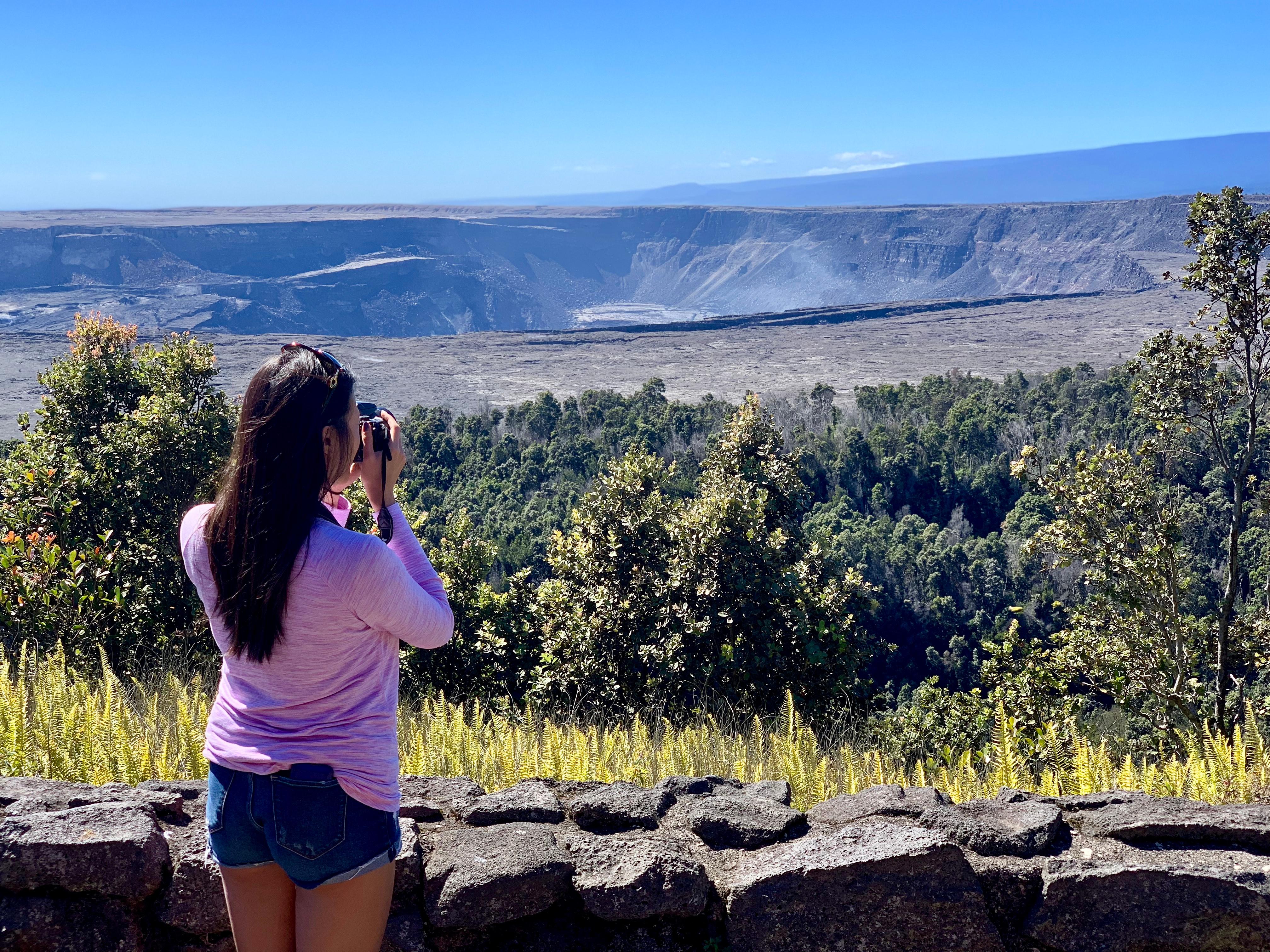
Kīlauea reaches only 1,247 metres above the Pacific. Mauna Loa, rising 4,169 metres directly behind it, is more than three times higher. The smaller volcano is the one the world watches. Hawaiʻi Volcanoes National Park was established on 1 August 1916, the twelfth national park in the United States and the first in what was then a territory. Its 335,000 acres climb from sea level to the Mauna Loa summit, crossing rainforest, the Kaʻū Desert and hardened flow fields within a single afternoon's drive. Thomas Jaggar founded the Hawaiian Volcano Observatory on the caldera rim in 1912, four years earlier; no comparable station has watched a volcano longer. UNESCO inscribed the park as a World Heritage Site in 1987. Most Big Island Volcano Tour Helicopter tours trace the same ground those early scientists mapped on foot. Puʻu ʻŌʻō erupted almost without pause from 1983 to 2018, thirty-five years of pāhoehoe and ʻaʻā that added roughly 350 hectares of new land to the southeastern shore. The 2018 summit collapse ended it. Halemaʻumaʻu, the crater Hawaiian tradition names as the home of Pele, dropped more than 500 metres and widened several times over; a water lake appeared on its floor in 2019, the first in recorded history, and boiled away when lava returned in December 2020. Episodic fountaining that began in December 2024 has drawn crowds back to the overlooks along Crater Rim Drive, where the observatory now reads the caldera from a safer distance than the perch it lost in 2018. Little here was built by architects. Volcano House has occupied the rim in some form since 1846; Mark Twain slept there in 1866 and described the lava burning below. Nāhuku, the lava tube publicised by Lorrin Thurston in 1913, runs some 500 years old beneath tree fern forest thick enough to hide it. Chain of Craters Road drops roughly 1,120 metres in 30 kilometres to sea cliffs where a 2003 flow buried the pavement outright. At Puʻuloa, more than 23,000 petroglyphs are carved into pāhoehoe, the largest such field in the islands. Guided Kīlauea volcano tours and Hawaii Volcanoes National Park day trips now reach these places from Hilo and Kona alike, and interest in Big Island Volcano Tour Helicopter tickets has risen alongside them — the caldera reads one way from the air, another entirely from the rim trail at dawn.
"The smaller volcano is the one the world watches."
A step-by-step walkthrough of the visit — what you'll see, how long each stage takes, and the details that matter.
You turn in at 1 Crater Rim Drive between 07:00 and 09:00, hand over the 30 USD per private vehicle fee — valid for seven consecutive days — and find the lot half empty before the first coach arrives. Steam is the first thing you notice. It rises off Wahinekapu in sheets, and the sulphur banks a few minutes on smell exactly as advertised. You walk the paved rim path to the Kīlauea Overlook and look into Halemaʻumaʻu: a grey floor, vog drifting east, cliffs stepped where the 2018 collapse dropped them. Ravens work the asphalt behind you. By mid-morning you are underground, ducking through Nāhuku with a phone torch, water running down the ceiling. Then the road — Chain of Craters, 30 kilometres of switchbacks past Puhimau and Kealakomo, ending where the pavement stops against a 2003 flow and the sea throws itself at black cliffs below. If you have joined a guided itinerary rather than driving, the guide adds what the park itself cannot: Rainbow Falls, a Punaluʻu black sand stop, a Kaʻū coffee farm, a stargazing dinner on the way home. Travellers who searched for a Big Island Volcano Tour Helicopter tour often end their day here instead, on the ground, close enough to hear the cliff give way.
Helicopter operators often coordinate with Hawaii Volcanoes National Park schedules, which are open 24/7. Always verify flight availability directly with your chosen provider for the current eruption status.
The entrance fee of 30 USD per private vehicle is paid at the main station or online via the official site. This pass allows you access to the park for 7 consecutive days.
The park entrance fee is 30 USD per private vehicle. Please note this does not include the cost of your aerial excursion, which must be booked through private operators.
Yes, Hawaii Volcanoes National Park is open 24 hours a day, 7 days a week, allowing you to plan your day around your big island volcano tour helicopter itinerary.
Tickets for aerial tours are sold by private companies, not at the park entrance. It is recommended to secure your spot well in advance of your Hawaii Volcanoes National Park visit.
Age requirements vary by operator; check directly with your flight service. It is a thrilling way to see the geological scale of Hawaii Volcanoes National Park.
Arriving at the park between 07:00–09:00 helps you avoid crowds and secures parking before you head to your tour meeting point.
Park operations continue in most conditions, but aerial tours may be grounded for safety. Check with your operator regarding their specific refund policy for your big island volcano tour helicopter ticket.
Bring plenty of water, sunscreen, and sturdy shoes for the ground portion of your trip to Hawaii Volcanoes National Park.