
11 hr
Big Island Grand Circle: Volcanoes, Waterfalls & Coffee
Full-day journey through Hawaii's volcanic landscapes, rainforest cascades, and working coffee orchards
Reserve
Hand-picked by our editors — only the best 5 experiences from 140 reviewed.
Verified partners for every tour, free cancellation where available, and instant confirmation on every booking.
11 hr
Full-day journey through Hawaii's volcanic landscapes, rainforest cascades, and working coffee orchards
Reserve
12 hr
A 12-hour Big Island adventure from coffee farms to volcanic craters, ending with dinner and stargazing.
Reserve
7 hr
Venture from Kilauea's fiery caldera to black sand beaches and Hilo's lush gardens on this epic 7-hour Big Island journey.
ReservePrices from verified partners. Availability updates in real time at checkout. Free cancellation policies apply where shown.
The landmarks, rooms, and views travelers on this tour remember — all visible on a single visit.
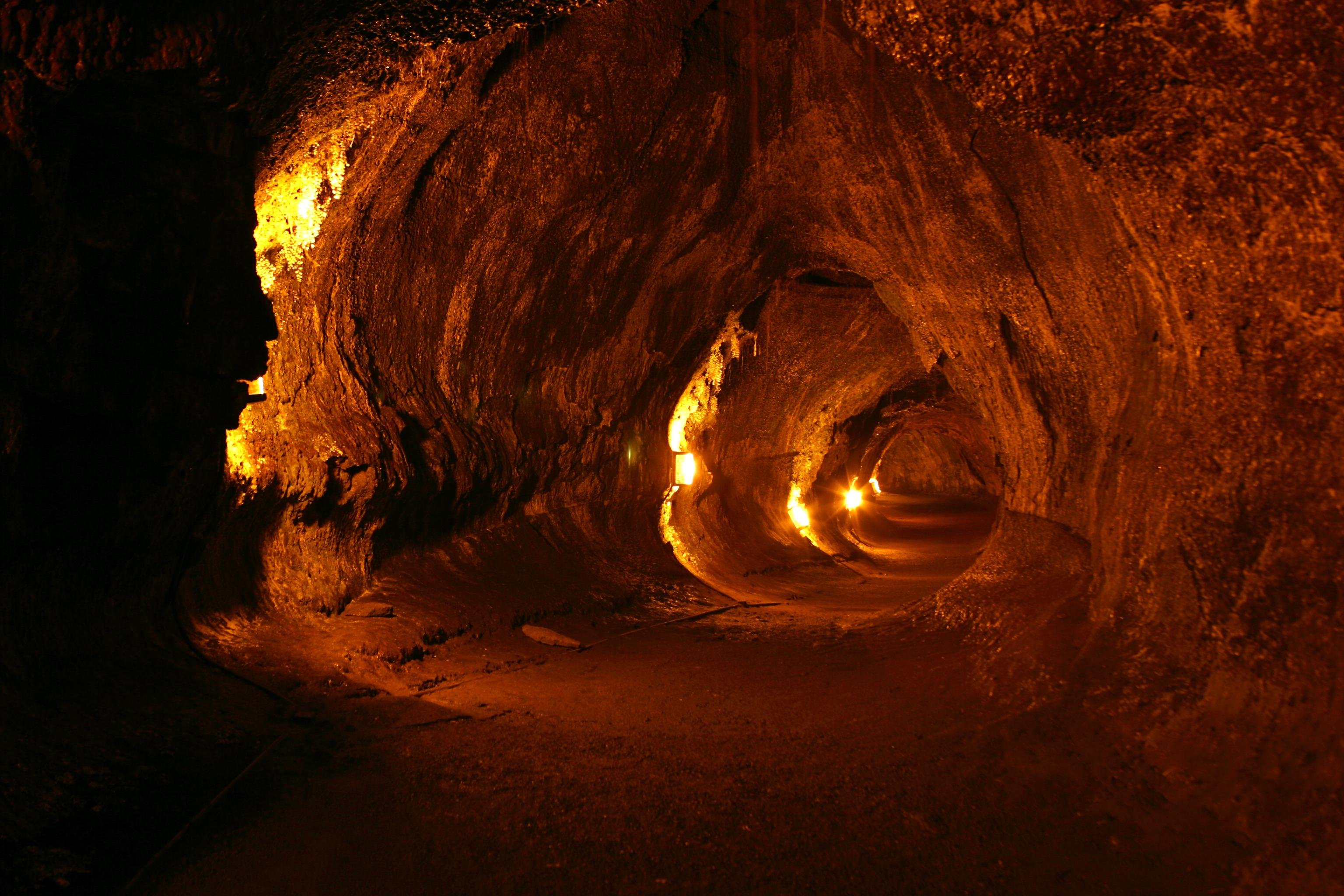
A 600-foot-long tunnel formed 350-500 years ago, featuring massive ceilings reaching over 20 feet.
Nāhuku offers a paved, accessible walk for those prioritizing comfort, whereas Kaumana Caves provide a rugged, self-guided adventure for visitors seeking a raw subterranean experience. These big island lava tube tours complement each other; most visitors who do both find the National Park more efficient for family outings while the wild caves provide a more thrilling, independent exploration.
| Feature | Top pick Nāhuku (Thurston) | Kaumana Caves |
|---|---|---|
Accessibility |
Paved path, fully accessible | Uneven terrain, ladder descent required |
Lighting |
Artificial lighting provided | Natural light only, requires flashlight |
Effort Required |
Minimal walking | Moderate, requires scrambling |
Safety/Support |
Park ranger monitored | Self-reliant, no on-site staff |
Geological Experience |
Interpretive signage, fern forest | Untouched, wild cavern environment |
Location |
Hawaii Volcanoes National Park | Hilo, outside park boundaries |
| See tickets → |
Verdict: Choose Nāhuku for a convenient, low-impact visit, or opt for Kaumana Caves if you have the gear and desire to secure big island lava tube tours tickets for a rugged, unguided geological adventure.
Choose your ticket, select your date, and reserve in under two minutes. Secure checkout handled by our verified partner.
Instant confirmation by email, with a mobile voucher you can save offline. No printing, no queuing at a collection desk.
Arrive at the entrance, show your voucher on your phone, and walk in. Most tickets include priority or skip-the-line access.
Practical details for your visit straight from our verified partners — hours, access, rules, and how to get there.
Wear sturdy, closed-toe hiking shoes for uneven volcanic surfaces. Bring a light rain jacket and layers, as the summit elevation (4,000 ft) is significantly cooler than the coast.
Keep all personal belongings with you. No lockers are provided at the site.
Photography is permitted. Use a tripod only if it does not block the narrow path, and be mindful of other visitors in the confined space.
The trail to the Nāhuku entrance is paved, but the tube itself features uneven, dark terrain and steps. It is not considered wheelchair or stroller accessible.
Cell service is unreliable inside the tube. Do not rely on mobile flashlights; bring a dedicated, reliable light source.
The area is kid-friendly and offers an educational look at geological formations. Supervise children closely on uneven, dark surfaces.
No food or drink facilities are inside the tube. Pack out all trash to protect the fragile subterranean ecosystem.
Pets are not allowed on the Nāhuku trail. Service animals are permitted per National Park Service regulations.
Stay on the marked trail to avoid damaging the delicate fern forest and cave walls. Touching the walls or roots is prohibited to preserve the site.
Best time to go, insider tips, nearby landmarks, and the cancellation fine print — flip through to skim what matters to you.
Flexible, no hidden fees.
Entrance fees are non-refundable. The 30 USD fee covers private non-commercial vehicles for seven days.
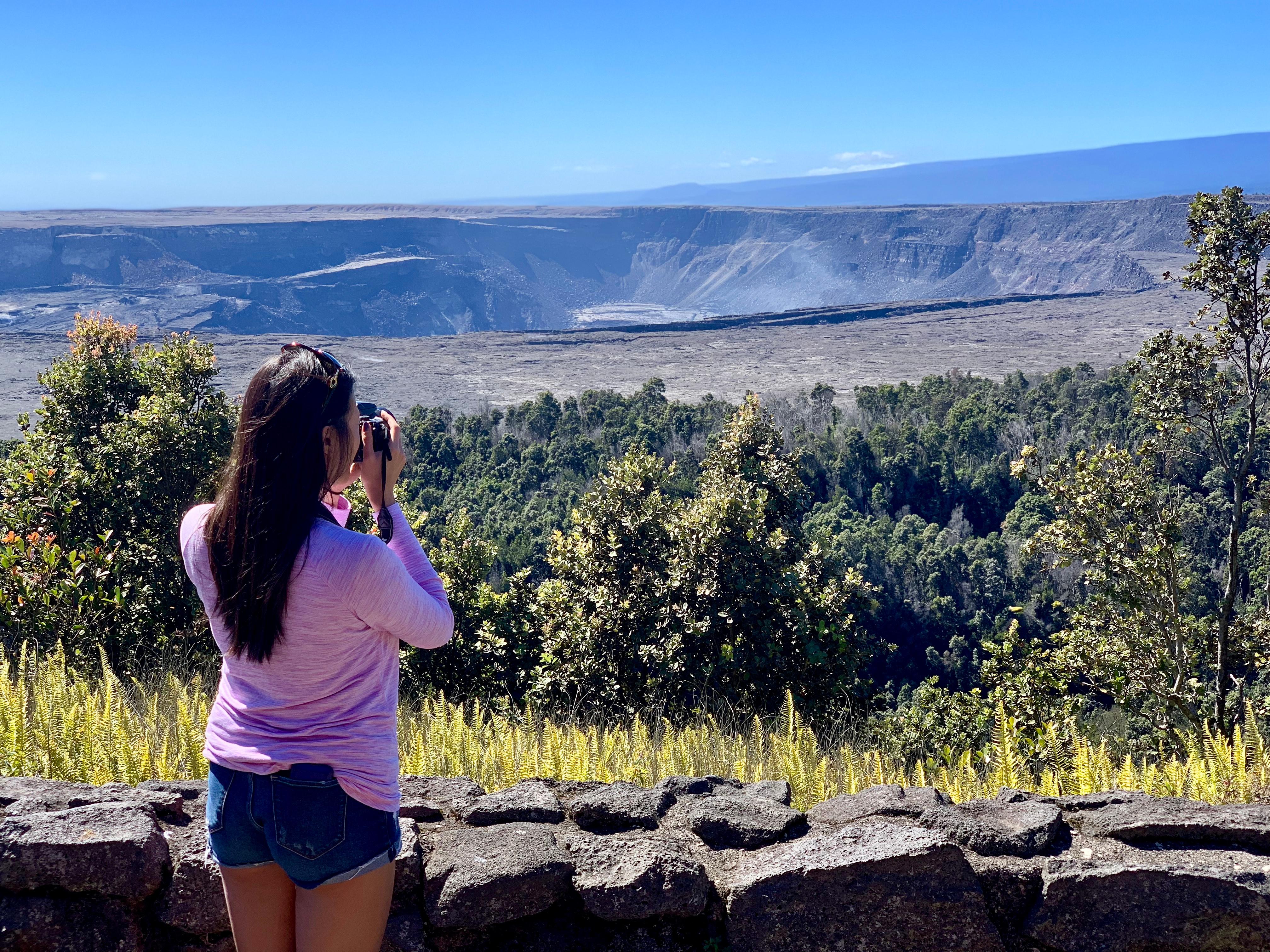
The lava tube beneath Crater Rim Drive drained itself roughly five centuries ago, and the empty pipe it left behind is tall enough to walk through without stooping. Molten rock moving downslope crusts over at the surface while the interior stays fluid. When the eruption stops, the liquid runs out. What remains is a hollow artery in the rock — smooth-walled, arched, faintly ribbed with the high-water marks of a river that no longer exists. Nāhuku, the Hawaiian name for the passage most visitors know as Thurston Lava Tube, was reported by a Honolulu newspaper publisher in 1913 and opened to foot traffic shortly afterward. The park itself was established in 1916, making 2026 its 110th year. Big island lava tube tours built around this corridor sit inside a landscape that is still being made: Kīlauea has reshaped Halemaʻumaʻu Crater repeatedly in the past decade, and the 1959 Kīlauea Iki eruption left a crusted lava lake that hikers now cross on foot. The geology explains the greenery. Rainfall on this windward flank exceeds 2,500 millimetres a year, and the collapsed sinkhole at the tube's entrance holds a pocket of ʻōhiʻa lehua and hāpuʻu tree ferns dense enough to shade the trail entirely. Native honeycreepers feed in the canopy. The contrast is abrupt — humid rainforest above, dry basalt below, separated by a dozen steps. The park's cultural weight matches its scientific one. Kīlauea is understood in Hawaiian tradition as the home of Pele, and the summit region remains an active site of practice, with offerings left at overlooks along the rim. UNESCO inscribed the park as a World Heritage Site in 1987. The Jaggar Museum, damaged in the 2018 summit collapse, has not reopened, and viewing has shifted to Keanakākoʻi and Uēkahuna. Guided big island lava tube tours generally fold the tube into a wider circuit — Chain of Craters Road, steam vents, the Puna coast, sometimes a black sand beach at Punaluʻu — because the corridor itself is brief and the surrounding terrain is what gives it meaning. Admission to the park is 30 USD per private non-commercial vehicle, valid for seven days, and the gates stand open 00:00–23:59 daily. Rangers at Kīlauea Visitor Center, reachable at +1-808-985-6011, post current closures each morning; conditions here change with the volcano rather than the calendar.
"What remains is a hollow artery in the rock — smooth-walled, arched, faintly ribbed with the high-water marks of a river that no longer exists."
A step-by-step walkthrough of the visit — what you'll see, how long each stage takes, and the details that matter.
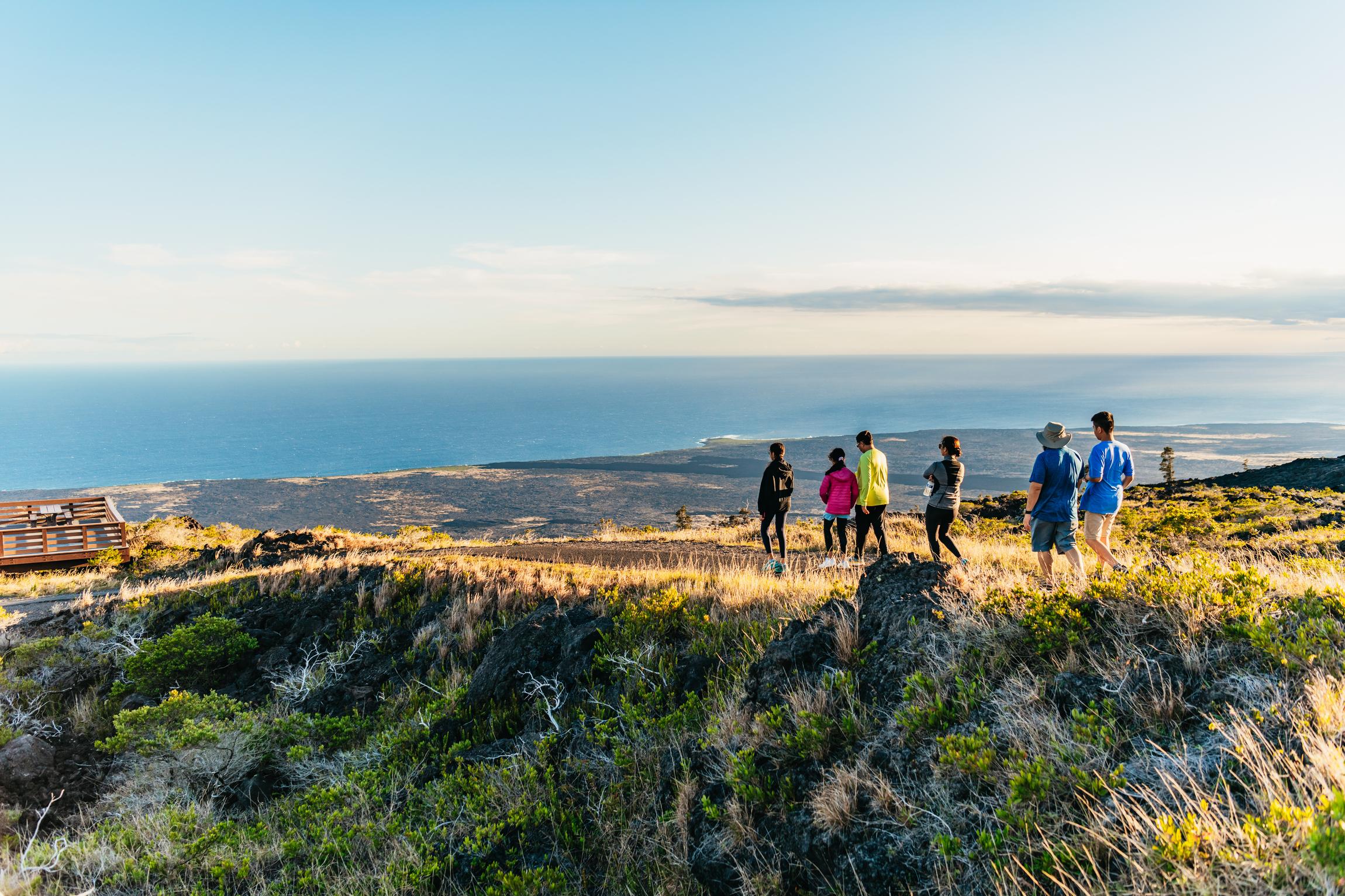
You leave Hilo in the dark on a coach or a helicopter shuttle and reach the park entrance in the 07:00–09:00 window, when the lot at Nāhuku still has spaces and the ferns are dripping. Your guide hands out headlamps. You descend the paved switchback into the sinkhole, ʻōhiʻa branches closing over the path, and the temperature drops several degrees before you reach the mouth. Inside, you walk about 180 metres of lit tube. The ceiling arches roughly six metres above you in places, then squeezes low enough that you duck. You run a hand along the wall and feel it glazed and cool. Water beads through the roof and lands on your collar. At the far gate you climb a stair back into daylight and the sound of ʻapapane returns all at once. After that, the day widens. Your big island lava tube tours itinerary continues along Crater Rim Drive to the steam vents, where you stand in warm sulphurous air blowing out of the ground, then down Chain of Craters Road past flow fields dated by their own crust. Depending on which option you chose, you finish at a black sand beach watching for honu, at a Kona coffee farm, or above the summit with a telescope and dinner. You reboard salted, damp, and quiet.
Access to Nāhuku is included with your Hawaii Volcanoes National Park entrance fee of 30 USD per private non-commercial vehicle.
The park is open 24 hours a day. Nāhuku itself is open 24/7, though lighting is most reliable during daylight hours.
Arrive between 07:00–09:00 to avoid mid-day crowds and secure parking.
The terrain inside is uneven and dark, making it unsuitable for wheelchairs or strollers.
No tickets are required for the self-guided Nāhuku experience; it is open to all park visitors.
Bring a flashlight, sturdy shoes, and water, as the tube is dark and the floor is uneven.
Yes, photography is allowed; please be respectful of the fragile environment and other visitors.
Drive to Crater Rim Drive within Hawaii Volcanoes National Park and follow signs to the Nāhuku parking area.
While Nāhuku is the primary tube in the park, other guided big island lava tube tours are available outside the park in locations like Hilo.